September 24, 2026
A diver working thirty metres down in poor visibility, and a supervisor topside relying on a comms link and a gut feeling about what’s happening at the other end of the umbilical, is not a great setup for making safety or inspection calls. That’s why an underwater CCTV camera has become standard equipment on most commercial diving jobs rather than an optional extra.
This guide is for the people who actually have to buy this equipment: inspection contractors putting together a spread, offshore project managers speccing a vessel, and procurement teams comparing one underwater camera system supplier against another. We’ll cover the types of systems on the market, which specs actually matter, how these cameras connect into a dive panel, and what to look for in a manufacturer.
A camera on a dive job does three things. It lets the supervisor see what the diver sees in real time, so decisions about the job, or the diver’s safety, aren’t made blind. It creates a recorded record that clients and auditors can check against a work scope. And it lets engineers who aren’t on the vessel weigh in on a defect without getting wet.
On a pipeline survey or hull inspection, that last point matters more than people expect. An engineer reviewing footage onshore can often make a better call on a weld defect or coating failure than a diver squinting at it through a mask in three metres of visibility.
Most buying mistakes come from picking the wrong category of camera, not the wrong brand.
Diving helmet cameras mount onto the helmet or bandmask and give a true point-of-view feed, hands-free. This is the default for surface-supplied commercial diving because it shows the supervisor exactly what the diver is looking at without the diver needing to aim anything.
Diver mounted camera systems cover a broader range, including helmet-mounted units as well as cameras rigged onto a harness or held on a small handheld frame. These get used when a job needs a different angle than head-mounted, close-up work on a flange or valve, for instance.
Dropped and towed cameras get lowered or towed from a support vessel without a diver in the water. They’re a cheap first pass for locating an object, checking a mooring line, or doing a rough condition survey before deciding whether a dive is even needed.
ROV camera systems mount on remotely operated vehicles for depths or conditions where sending a diver isn’t practical. These usually pair with additional lighting and sometimes sonar, and they’re the default on deepwater pipeline and platform work.
Fixed underwater surveillance camera systems stay mounted at one location, a jetty, dock, fish farm, or intake structure, for continuous monitoring rather than a one-off inspection.
Camera Type | Best For | Diver Required | Typical Use |
Helmet Camera | Diver POV inspection | Yes | Hull, pipeline, structural inspection |
Dropped Camera | Quick visual checks | No | Moorings, underwater assets |
Towed Camera | Area surveys | No | Harbour and seabed inspection |
ROV Camera | Deepwater work | No | Pipelines, platforms, subsea structures |
Fixed Camera | Continuous monitoring | No | Intakes, docks, marine facilities |
Most contractors end up owning more than one type. A vessel doing pipeline and hull work typically carries a helmet camera for the diver, a dropped unit for quick site assessment, and access to an ROV system for anything beyond diver depth limits.
Depth rating: Buy for your actual working depth plus a real margin, not the minimum you think you need. A housing rated right at your operating depth with no buffer becomes a problem once seals age or the unit takes a minor knock.
Sensor performance in low light: CCD sensors have traditionally handled low-light, low-visibility water well, though good CMOS sensors have closed much of that gap in recent years and offer lower power draw. For an HD underwater inspection camera used on turbid harbour or pipeline work, how the sensor performs in murky, dim conditions matters more than the resolution number on the box.
Lighting: An underwater camera with lights is what makes footage usable once you’re a few metres down or in silty water. Look at beam angle and how well the light controls backscatter, the “snow” effect caused by particles reflecting light back at the lens, rather than just the lumen rating.
Cable and connectors: Long tether runs add drag and are a common failure point if the jacket or connector isn’t built for repeated handling on deck. This matters for anything used as an underwater camera for pipeline inspection, where cable runs tend to be long and deck handling is rough.
Housing and pressure integrity: A waterproof rating alone doesn’t make a camera inspection grade. A waterproof camera for offshore inspection needs a housing engineered for repeated pressure cycling, not a one-time depth test in a lab.
Video output and integration: Does it feed straight into your dive panel monitor, does it need a separate DVR, can it record and display live at the same time? This is where buyers often get caught out after the purchase, not before.
This part is specific to commercial diving rather than general underwater photography. A helmet-mounted camera typically runs its video signal through the same umbilical bundle as the diver’s air supply, comms line, and depth gauge readout. That signal terminates at the surface dive control panel, usually through a BNC connector feeding a monitor or a DVR next to the supervisor’s console.
The practical point is that compatibility isn’t just about the camera. It’s whether the video wiring, connector type, and power supply match your existing panel, or whether you’re now adding a separate monitor and power source into an already crowded console. Worth checking before the purchase, not after.
Underwater camera for ship hull inspection work is one of the more common applications, since class societies and port authorities increasingly want documented, timestamped footage rather than a written report alone. A real-time feed lets a surveyor sign off remotely while the diver is still in the water, which saves a redive if something needs a second look.
Pipeline and subsea structure surveys are the other major use case. An underwater video camera for commercial diving paired with recording capability gives the operator a permanent record of coating condition, anode wastage, or free span, useful for both maintenance planning and compliance.
Beyond inspection contracts, ports, naval facilities, and industrial water intakes often run an underwater camera monitoring system on a semi-permanent basis for security and condition checks, without needing a diver at all.
Diving camera system price varies more than people expect, and the spread isn’t random. A basic dropped camera with no lighting and a short cable costs a fraction of a full helmet-integrated system with recording, lighting, and panel-compatible wiring. The variables that move the number most are sensor quality, depth rating, cable length and build quality, whether lighting is integrated or separate, and whether the unit is sold standalone or as a complete system with monitor, DVR, and cabling included.
The cheapest option on a spec sheet is rarely the cheapest option over a project. A camera that fails mid-charter, or produces footage too dark to actually assess a defect, costs more in redives and downtime than the purchase price ever saves.
Whether you’re comparing a subsea camera manufacturer, an offshore underwater camera supplier, or specifically a subsea CCTV system manufacturer in India, the underlying question is the same: is this company backed by people who understand diving operations, or is it a general security camera business that added “underwater” to a product listing?
A few things worth checking before committing to any marine inspection camera equipment supplier:
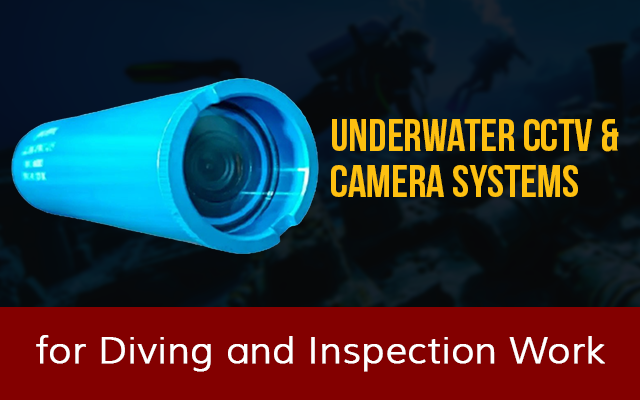
We manufacture our own diving inspection camera at J. K. Subsea, the JK-UWC-300, built for the kind of low-visibility, low-light conditions most commercial diving actually happens in.
Sensor: 1/4″ CCD Resolution: 330 TVL Minimum illumination: 0.05 Lux / F2.0 Power supply: 12 VDC, 1.44W Video output: 1 Vp-p / 75 ohms, BNC connector Integration: Standard BNC and 12VDC wiring, straightforward to fit into most existing dive panel setups without a new console build Typical applications: Commercial diving support, hull and structural inspection, offshore surveillance
It’s one part of a wider catalogue that includes diving equipment, gas systems, and hyperbaric chambers, built and serviced from our facility in Navi Mumbai since 2003.
Mainly for real-time monitoring of a diver during commercial diving work, and for recording inspection footage on jobs like pipeline surveys, hull checks, and subsea structural work.
For surface-supplied diving, a diving helmet camera integrated with the dive panel is the standard choice, since it gives the supervisor a direct, hands-free view of what the diver sees.
Depth ratings vary by model, from a few tens of metres on basic dropped cameras to several hundred metres on ROV-mounted or purpose-built subsea units. Always buy with a real margin above your actual working depth.
Depth rating with margin, sensor performance in low light, integrated lighting quality, cable and connector durability, and whether the video output matches your existing dive panel or recording setup.
Yes. Most commercial diving cameras output video through a BNC connector that runs alongside the diver's air supply and comms line in the umbilical, terminating at a monitor or DVR on the surface panel.
Diving camera system price depends heavily on sensor quality, cable length, integrated lighting, and whether it's sold as a standalone camera or a complete system with monitor and recording included. It's worth comparing total cost of ownership, not just the purchase price.
Many categories, including air panels, machinery containers, and umbilical lengths, can be configured to project requirements. Confirm customisation options, added lead time, and any effect on certification with the manufacturer before ordering.
Underwater camera systems have gone from a nice addition to a near-mandatory part of commercial diving and inspection work, largely because clients and regulators now expect visual proof rather than a written report alone. Whether you’re speccing a full helmet camera setup, adding an ROV camera system to extend your depth range, or need a reliable dropped unit for quick site checks, the fundamentals stay the same: buy for your real operating conditions, check that it integrates with what you already run, and choose a supplier who understands diving operations, not just cameras.
If you want to talk through what fits your operation or want the datasheet for the JK-UWC-300, get in touch with our team.
Fill in your details below to instantly download the product datasheet.