September 2, 2026
Commercial diving equipment is the collection of surface-supplied systems, life support components, hyperbaric equipment and underwater tools that allow professional divers to work safely on offshore, marine and industrial projects. Unlike recreational scuba gear, it is built and documented as a life-support system, with selection driven by depth, gas requirements, project duration, diver numbers and the working environment.
This guide is for the people who specify, compare and buy this equipment: diving contractors, offshore and subsea companies, marine engineering firms, project managers, and procurement teams evaluating suppliers. It covers the major equipment categories, how they work together as a system, what to check before purchase, and how to evaluate a supplier, including India-specific sourcing considerations.
Commercial Diving Equipment refers to the surface-supplied breathing systems, life support panels, umbilicals, helmets, decompression chambers, launch and recovery systems, and related support equipment used by professional divers on contracted underwater tasks such as inspection, construction, maintenance and salvage.
The defining difference from recreational diving equipment is accountability. A commercial diving spread is planned and operated as a system: gas supply, communication, depth monitoring and emergency backup are managed from the surface by a diving supervisor, rather than left to the individual diver. Equipment is typically selected and documented against industry codes of practice such as those published by IMCA (International Marine Contractors Association), along with applicable class society and pressure vessel requirements.
A commercial diving project draws on equipment from several functional groups rather than a single kit:
Which of these a project needs depends on the diving mode (surface-supplied air, mixed gas, or occasionally scuba-based support work), the depth, the diver count, and whether the work is inshore, harbour-based, or offshore.
Commercial Diving Helmets are rigid, surface-supplied helmets that seal around the head and neck, supply gas on demand, and house communications, giving a more stable seal and better protection than a full-face mask for welding or work near structures. Check rated depth, gas compatibility, and spare parts availability.
Diver Umbilicals bundle the breathing gas hose, communications cable, and pneumofathometer hose for depth sensing into a single assembly connecting the diver to the surface. Specify core configuration, pressure rating, sheath material, and length relative to depth and vessel layout.
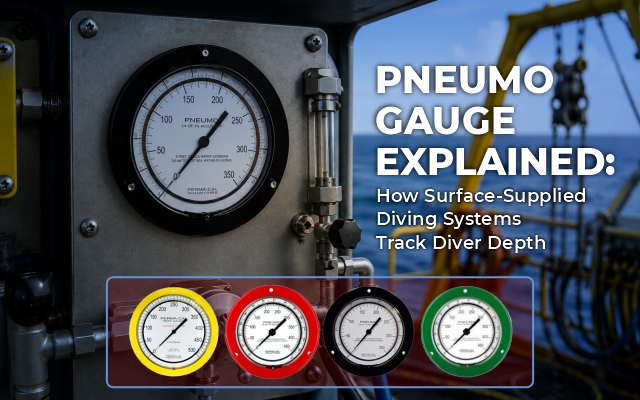
Diver Air Panels / Life Supper panels are where the supervisor manages breathing gas supply, monitors each diver’s pressure and depth, and switches between primary and reserve gas, making this one of the most safety-critical items on a spread. J. K. Subsea’s diver air panel covers two and three diver configurations; its earlier guide on how surface-supplied systems track diver depth explains the monitoring side. Check diver capacity, gauge calibration, and design against IMCA guidance.
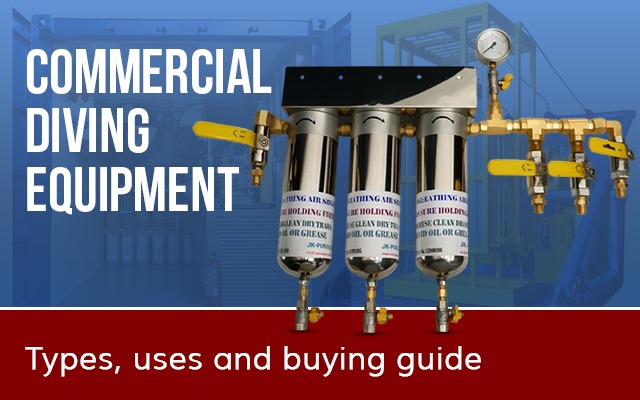
Breathing Air Systems and Low-Pressure Compressors filter and compress ambient air through a multi-stage filtration train before it reaches the panel or storage. Ask about filter stages, output relative to diver numbers, and backup compressor provision.
Gas storage and cylinder systems, including cylinder banks, quads and cascades, hold reserve or primary gas. A cylinder quad is a manifolded group of cylinders on a certified frame; J. K. Subsea’s cylinder quad is configured for oxygen, breathing air, helium and nitrogen. Check capacity, frame lifting certification, and gas colour-coding.
Diving Machinery Containers group air production, filtration, storage and distribution into a mobilisable containerised unit, useful for offshore or extended projects. J. K. Subsea’s machinery container comes in 20ft and 10ft formats.
Decompression Chambers are pressure vessels used to bring divers back to surface pressure on a controlled schedule, or to treat decompression sickness, and are among the most heavily documented items on a spread. J. K. Subsea’s air decompression chamber is built with approved materials, qualified welding, and third-party inspection. Request certification and test records, lock configuration, and built-in breathing system (BIBS) provision.
Launch and Recovery Systems (LARS), typically a winch, basket or stage with an A-frame or davit, move the diver between deck and water in a controlled way, giving the supervisor physical control where vessel motion or current make entry and recovery risky. Selection depends on deck space, diver numbers, and safe working load. J. K. Subsea’s launch and recovery system range covers single and twin basket configurations.
Hydraulic Power Packs supply pressurised fluid to underwater tools such as grinders, drills and cutting equipment; output needs to match the flow and pressure demands of the tools in use.
Diver communication systems, normally integrated into the helmet and umbilical, give continuous voice contact between diver and supervisor, a meaningful difference from recreational diving, which typically has no live surface link.
Life support and gas monitoring equipment, including CO2 and oxygen analysers, verify breathing gas quality and chamber atmosphere. A CO2 scrubber removes carbon dioxide buildup in a closed or semi-closed environment. This equipment should carry current calibration records, since a drifted analyser gives false assurance rather than genuine safety information.
Diving suits and boots protect against cold, abrasion and marine hazards, with selection depending on water temperature, dive duration, and task; hot-water suits are typically reserved for cold-water or long-duration work.
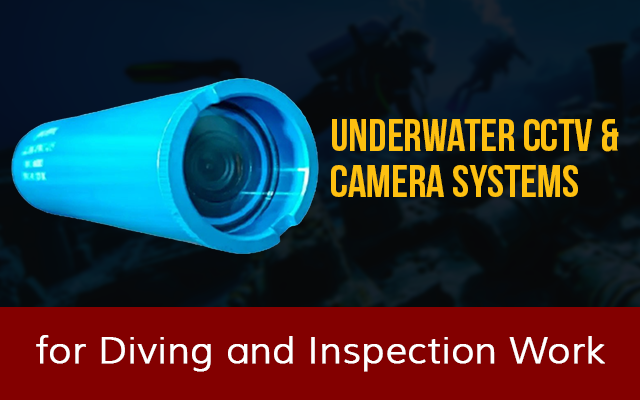
Underwater tools and inspection equipment cover cutting and welding sets, hydraulic tools, and inspection instruments for pipeline, hull, or structural work. Underwater cameras let the surface team and client representatives observe the work and keep a video record; J. K. Subsea’s underwater camera systems serve this purpose.
Diving fittings and valves connect gas and hydraulic lines throughout the system, and are a common point of failure if mismatched or poorly rated, so material compatibility, pressure rating, and standardisation matter as much here as anywhere in the spread. J. K. Subsea’s diving fittings and valves range is built around this compatibility.
Emergency and backup equipment, including backup gas, a diver bailout system, and access to emergency recompression, should be planned through project risk assessment rather than treated as an afterthought.
Complete commercial diving spreads combine compressor, gas storage, panel, umbilicals, helmets, LARS, and chamber where required, sized to diver numbers and depth. Portable configurations such as a scuba replacement package (SRP) suit smaller or shorter jobs; J. K. Subsea’s comparison of 2-diver versus 3-diver SRP configurations is a useful reference for sizing this kind of spread.
Surface-supplied diving equipment delivers breathing gas to a diver continuously from the surface through an umbilical, rather than from a tank the diver carries. It is the standard method for most commercial diving work because it removes the diver’s dependency on a limited air supply and keeps the diver connected to a surface team monitoring depth, gas consumption, and communication throughout the dive.
Gas is produced or stored at the surface, routed through the air panel where the supervisor controls and monitors supply, and delivered through the umbilical to a helmet or full-face mask. The umbilical also carries the communications and depth-sensing lines, so the surface team reads the diver’s depth directly. This is a meaningful distinction from recreational scuba, where the diver carries a fixed gas supply and dives without a live surface link or supervisor oversight.
Because the diver is not limited by a single tank, surface-supplied diving supports longer working dives, suiting inspection, construction and maintenance tasks. Configuration still needs to match the project: a two-diver inshore inspection job and a three-diver offshore job at greater depth call for different panel capacity, gas storage, umbilical length and backup provisions, even though both are “surface-supplied.”
Offshore projects, including platform inspection, subsea pipeline work, and marine construction support, place heavier demands on equipment than inshore work because of vessel motion, weather exposure, and often greater depth. A typical offshore spread includes a machinery container or equivalent gas system, an air panel sized for the diver team, a LARS suited to the vessel’s deck, depth-rated umbilicals, backup gas and communication provisions, and, depending on depth and duration, an on-site decompression chamber. Offshore equipment is also more likely to require third-party or class society approval relevant to the vessel it operates from, and this should be confirmed with the diving contractor or surveyor early, not discovered at mobilisation.
The same equipment category can look very different depending on the job. Diving mode (air, mixed gas, or scuba-based support) drives panel, gas storage and helmet configuration. Working depth pushes up umbilical rating, gas volume, and decompression and chamber requirements. Diver numbers set panel design, cylinder quad sizing and LARS basket capacity. Short inshore jobs can often run on a portable SRP-style spread, while extended offshore work usually justifies a full Machinery Container and dedicated chamber. Open-water offshore conditions demand more robust LARS, umbilical protection and weatherproofing than sheltered harbour work, inspection tasks lean on cameras and communication quality, and construction or maintenance work adds hydraulic tools. Underlying all of this, the codes of practice a contractor operates under, commonly referencing IMCA guidance, shape what documentation is non-negotiable for the project.
Choosing commercial diving equipment starts with the project requirement, not the catalogue. Define diving mode, working depth, diver numbers, duration and environment first, then match equipment to those numbers rather than starting from a preferred brand or the lowest quoted price.
Procurement checkpoints worth treating as standard practice:
The right equipment for a project is the equipment that matches the diving mode, depth, duration and documentation requirements of that job. Price alone is not a reliable basis for that decision, since two products at very different price points may be built to different specifications or certification levels that are not obvious from a spec sheet.
Beyond the checkpoints above, confirm warranty terms, compatibility with equipment already in your inventory, design sign-off timelines for customised items, and whether local support and spares are available in your operating region.
Choosing a commercial diving equipment supplier means evaluating engineering capability and documentation, not just product listings. A supplier that can explain how equipment is designed, tested and supported after delivery is a different proposition from one simply reselling catalogue items.
Points worth assessing when comparing a commercial diving equipment supplier or commercial diving equipment manufacturer:
A Diving Equipment Supplier that treats these as routine, answerable questions, rather than deflecting to marketing language, is generally a stronger long-term partner than one selected on price alone.
Buyers searching for commercial diving equipment India or a diving equipment manufacturer India are often weighing the practical benefits of sourcing locally against established international brands. A domestic manufacturer can simplify pre-purchase technical discussions and after-sales queries, since time zone and language barriers are reduced, and can typically offer shorter delivery timelines, more straightforward logistics, and easier spare parts and repair support than importing equipment, which matters when a project has a fixed mobilisation date.
None of this reduces the certification requirement, though. Equipment sourced in India for offshore or export projects should still be evaluated against the same documentation questions as any other supplier: material certificates, pressure testing, and relevant codes of practice. Indian offshore and marine projects, whether related to pipeline inspection, port infrastructure, or platform maintenance, often carry specific client or class requirements, so a manufacturer familiar with these operating conditions can be a practical advantage when equipment needs project-specific configuration.
J. K. Subsea Engineering, based in Navi Mumbai and operating since 2003, is one example of a manufacturer working in this space, with a product range spanning diving air panels, decompression chambers, machinery containers, LARS, cylinder quads, and diving fittings and valves, referenced against IMCA guidance and manufactured under an ISO 9001-certified quality system. Any buyer evaluating a manufacturer, J. K. Subsea included, should still confirm current certifications and project-specific documentation directly with the supplier before purchase.
A dive spread only functions as a system, not a collection of separate purchases. Breathing air starts at the compressor, passes through filtration, and is stored in cylinder banks or routed to the air panel. The supervisor at the panel controls and monitors supply to each diver, sending gas down the umbilical along with communications and depth-sensing lines to the helmet. The LARS controls how the diver physically enters and exits the water, and if decompression obligations require it, the chamber provides controlled, monitored decompression or emergency treatment, with backup gas and standby equipment behind all of it.
This is why compatibility between components, and between suppliers if equipment is sourced piecemeal, matters as much as the specification of any single item. A well-rated air panel connected to an incompatible umbilical fitting undermines the system regardless of how good the individual components are on paper.
The surface-supplied breathing systems, life support panels, helmets, umbilicals, decompression chambers, launch and recovery systems, and related support equipment used by professional divers on contracted underwater work, as distinct from recreational scuba gear.
Typically a helmet, umbilical, air panel, gas storage and compression equipment, a LARS, communication equipment, and, depending on the project, a decompression chamber and task-specific tools, working together as gas production, control, deployment, communication and emergency provisions.
Equipment that delivers breathing gas continuously from a surface source through an umbilical, rather than from a diver-carried tank, controlled and monitored by a surface supervisor. Recreational scuba, by comparison, relies on a diver-carried gas supply without ongoing surface monitoring.
Generally a machinery container or equivalent gas system, an appropriately sized air panel, a LARS rated for the vessel's deck, depth-rated umbilicals, and, an on-site decompression chamber.
Match equipment to your project's diving mode, depth, diver numbers and duration, and verify component compatibility, maintenance support and total cost of ownership rather than price alone. Request material certificates, pressure testing and calibration records, relevant codes of practice referenced (such as applicable IMCA guidance), and, for pressure vessels, welding and inspection documentation. Where applicable, also verify TPL or Class certification/approval and ensure the equipment meets the required project, vessel and regulatory standards.
Evaluate manufacturing capability, engineering support, technical documentation, testing and certification practices, customisation ability, spare parts availability, and prior experience with similar equipment.
Many categories, including air panels, machinery containers, and umbilical lengths, can be configured to project requirements. Confirm customisation options, added lead time, and any effect on certification with the manufacturer before ordering.
Selecting commercial diving equipment comes down to matching documented, certified equipment to a project’s depth, gas, diver capacity and environmental requirements, and confirming a supplier can support that equipment through delivery, commissioning and the life of the project. If you are comparing surface-supplied systems, air panels, decompression chambers, LARS, or a complete diving spread for an upcoming offshore or subsea project, J. K. Subsea’s engineering team can talk through your project’s diving mode, depth, diver numbers, and certification requirements, and help you work out what configuration fits the job. You can review the full diving equipment range or get in touch to discuss your specifications.
Fill in your details below to instantly download the product datasheet.