

August 24, 2026
I’ve watched new divers stare at their first stage during a gear briefing with this mix of trust and total confusion, trusting it to keep them alive, confused about how a metal box the size of a fist actually does that. Fair reaction. A diving regulator is taking gas at 200 to 300 bar and handing it back to you at exactly the pressure your lungs can use, adjusting itself constantly as you move up, down, and as the tank empties. That’s a lot of quiet engineering happening every time you breathe.
This piece is for two kinds of readers at once. Someone buying their first scuba regulator and wanting to actually understand how does a scuba regulator work before spending money, and procurement teams sourcing regulators for offshore or industrial diving where the wrong choice isn’t an inconvenience, it’s a safety incident waiting to happen.
Start with the number that matters: tank pressure. A full cylinder holds somewhere around 200 to 300 bar. That is not breathable air by any stretch, it would rupture lung tissue in well under a second if it hit you directly. So the regulator’s entire purpose, the whole reason it exists, is to bring that number down safely in controlled steps.
First stage. Bolted or clamped onto the cylinder valve, this is where the big pressure drop happens. Tank pressure comes in, and the first stage brings it down to an intermediate pressure, usually 8 to 10 bar above whatever the surrounding water pressure is at that moment. Notice the phrase “above ambient.” The first stage isn’t targeting a fixed number, it’s tracking depth constantly and adjusting output as pressure around the diver changes. That’s the part people rarely appreciate: this isn’t a static pressure valve, it’s a live feedback mechanism.
Second stage. The mouthpiece. It takes that intermediate pressure and drops it one final time, down to match ambient pressure exactly, and only releases gas when the diver actually inhales. This is where regulator second stage diving performance really shows up, because a poorly tuned second stage is the difference between breathing feels normal and breathing feels like sucking through a straw.
If this were a single step instead of two, you’d either get almost nothing or a violent uncontrolled blast, neither of which is survivable. Splitting the reduction across two stages is what makes controlled, comfortable breathing possible at all.
Spec sheets throw these terms around without explaining why they matter, so here’s the short version on the diving regulator parts that actually change how the thing performs.
A piston first stage uses a moving piston to sense and respond to pressure changes. Simpler mechanically, fewer moving parts, generally cheaper to service, but the piston sits exposed to water, which means performance can drift slightly in very cold or silty conditions unless the design compensates for it.
A diaphragm first stage uses a flexible diaphragm to isolate the internal mechanism from the water entirely. More complex, usually a bit more expensive, but better suited to cold water and contaminated water because the sensitive internals stay sealed away from what’s actually in the water around the diver.
Then there’s balanced versus unbalanced, which affects breathing effort directly. An unbalanced first stage gets progressively harder to breathe from as tank pressure drops during the dive, and also performs differently at different depths. A balanced first stage compensates for both, delivering the same breathing resistance whether the tank is full or nearly empty, and largely regardless of depth. For anyone diving deep, diving long, or running commercial operations where consistent performance across a full shift actually matters, balanced designs are worth the extra cost. This is one of the quieter factors in what makes the best regulator for deep diving, more than brand name or how shiny the housing looks.
First stage. Bolted or clamped onto the cylinder valve, this is where the big pressure drop happens. Tank pressure comes in, and the first stage brings it down to an intermediate pressure, usually 8 to 10 bar above whatever the surrounding water pressure is at that moment. Notice the phrase “above ambient.” The first stage isn’t targeting a fixed number, it’s tracking depth constantly and adjusting output as pressure around the diver changes. That’s the part people rarely appreciate: this isn’t a static pressure valve, it’s a live feedback mechanism.
Second stage. The mouthpiece. It takes that intermediate pressure and drops it one final time, down to match ambient pressure exactly, and only releases gas when the diver actually inhales. This is where regulator second stage diving performance really shows up, because a poorly tuned second stage is the difference between breathing feels normal and breathing feels like sucking through a straw.
If this were a single step instead of two, you’d either get almost nothing or a violent uncontrolled blast, neither of which is survivable. Splitting the reduction across two stages is what makes controlled, comfortable breathing possible at all.
This gets confusing because recreational divers and industrial gas engineers mean slightly different things by it.
In scuba, single stage regulators reduced tank pressure to ambient in one step. Nobody manufactures them for new sale anymore, though a small community still dives the old double-hose versions out of preference. Every current scuba regulator uses the two-stage single-hose design because it performs better across the board.
In industrial and commercial gas systems, including many surface supplied diving setups, the single stage vs double stage regulator question is a genuine, live decision rather than a settled one. A single stage unit does the whole pressure reduction in one internal step. It’s simpler, cheaper, and fine for basic supply, but outlet pressure tends to drift downward as the source cylinder empties. A double stage unit splits that reduction across two internal stages and holds outlet pressure remarkably steady across almost the entire cylinder range, which is exactly why commercial diving air supply and medical gas systems standardize on double stage designs. If your operation needs predictable delivery pressure over a long shift, that stability isn’t optional.
The connection between the first stage and the cylinder valve comes in two common forms. A Yoke fitting clamps around the cylinder valve using a screw knob and traps an O-ring against the valve face. It’s the standard fitting in recreational diving worldwide, simple to use, quick to attach and detach.
A DIN fitting screws directly into the cylinder valve itself, which traps the high-pressure O-ring inside the valve rather than exposing it externally. This makes DIN fittings inherently more secure at very high pressures and is why technical, deep, and much commercial diving standardizes on DIN over Yoke. If you’re buying equipment for higher pressure cylinders or genuinely deep operations, checking which fitting your cylinders use before ordering regulators saves an awkward adapter conversation later.
A regulator built for compressed air isn’t automatically safe or suitable for every gas a diver might breathe.
Standard air regulators handle regular compressed air fine, and most also tolerate nitrox blends up to around 40% oxygen without modification, though it’s worth confirming with the manufacturer rather than assuming.
An oxygen regulator for diving is a genuinely different piece of equipment, not just a relabeled air regulator. Oxygen under pressure reacts with certain lubricants, oils, and even some seal materials in ways that can cause ignition inside the regulator itself. Oxygen-service regulators use oxygen-compatible materials and go through a specific oxygen cleaning process during manufacture. Using a standard air regulator on an oxygen system is a real and documented cause of equipment fires, not a theoretical risk, so this distinction is worth taking seriously rather than treating as a technicality.
Mixed gas and technical diving setups introduce further complexity around flow rates and cold-gas performance, which is beyond what most standard regulators are built to handle without specific technical-diving modification.
Cold water free-flow is one of the more misunderstood failure modes in diving. As gas expands rapidly through the regulator’s internal orifices, it cools, sometimes enough to freeze any moisture present inside the mechanism. Once ice forms around a valve seat, the regulator can stick open and free-flow uncontrollably, or freeze shut. This isn’t really about the surrounding water temperature so much as the temperature drop generated internally by the gas expansion itself, which is why a regulator can free-flow in water that doesn’t feel dangerously cold to the diver.
Environmentally sealed first stages address this by isolating the mechanism from water entirely, sometimes using a small chamber of non-freezing fluid instead of direct water contact. For genuinely cold environments, some industrial diving regulator and commercial gas regulator designs go further, adding an electric heater directly into the body to prevent internal icing during extended use. If your operation runs in cold water regularly, this is not a feature to treat as optional.
A scuba regulator setup is fully self-contained, diver carries the tank and both stages, which suits recreational diving and independent commercial work where mobility beats endurance.
A surface supplied diving regulator system feeds gas down an umbilical from a topside panel instead. This is the backbone of most commercial and offshore diving, where dive duration, two-way communication, and continuous topside monitoring outweigh the freedom of an independent tank.
Regulator for hookah diving describes a lighter version of the same surface-supplied idea, typically a small compressor or cylinder bank on a boat feeding one or a few divers through a hose, common in shallow commercial and aquaculture work where a full surface-supplied rig would be overkill.
An industrial diving regulator often sits inside a larger gas distribution system entirely, feeding panels, gas banks, or manifolds rather than a diver directly, and needs to hold precise outlet pressure across long shifts and multiple simultaneous users rather than a single dive profile.
Spec sheets for diving regulator specifications have a lot of numbers, but a handful genuinely change how the regulator will perform in your operation.
Maximum inlet pressure tells you the ceiling for cylinder pressure the unit can safely accept, buy with margin above your actual working pressure, not right at the line. Maximum outlet pressure and locking pressure set what gets delivered downstream and where the regulator cuts off, which needs to match the rest of your gas system rather than being chosen in isolation. Flow capacity, listed as Cv, tells you how much gas the regulator can pass at a given pressure drop, more relevant on commercial systems feeding multiple divers than on a single scuba kit. Temperature range flags cold-water suitability directly. Diaphragm and seat materials, commonly stainless steel diaphragms with PTFE seats on commercial-grade units, drive both durability and gas compatibility. Compliance with a recognized standard, IS 6901:2009 for regulators manufactured in India, or EN837-1 for the pressure gauges fitted to them, gives you something independently verifiable rather than a manufacturer’s own marketing claim.
Diving regulator maintenance keeps showing up in searches because people genuinely don’t know the schedule, and the honest answer is that it depends on use intensity, not a single fixed number. Recreational regulators typically need annual servicing. Commercial regulators in daily or near-daily rotation need it far more often, sometimes tied to hours in service rather than calendar time. A service typically replaces O-rings and diaphragms, checks intermediate pressure against factory spec, inspects valve seats for wear, and confirms correct breathing effort (cracking pressure) on the second stage.
For a commercial operation, diving regulator service and repair has to sit on a fixed schedule in the maintenance log, not get handled reactively after something already feels off. A regulator that’s overdue for service is a liability on paper before it’s ever a problem in the water, and it’s usually the first thing an incident investigation checks.
Whether you’re evaluating a diving regulator manufacturer, a commercial diving regulator supplier, or looking for a regulator for commercial diving built to a documented standard, a short list of questions cuts through most of the marketing quickly.
Does the company manufacture the body and internals themselves with traceable material certificates, or is this a relabeled import with no visibility into where it actually came from. Can they support you locally with spares and service kits, or does every fault mean a shipment overseas and weeks of downtime. Is it built to a recognized standard like IS 6901:2009, with gauges to EN837-1, or is the spec sheet an in-house number nobody outside the company can verify. And do they have real, checkable experience with commercial or offshore diving clients specifically, rather than general industrial gas work with “diving” added to a product description afterward.
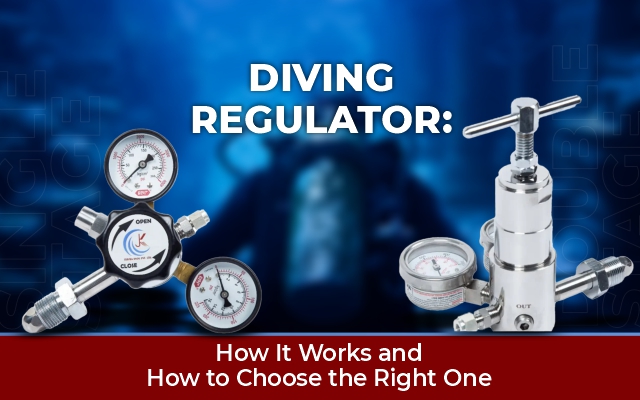
We manufacture single stage and double stage regulators at JK Subsea in stainless steel and high-grade brass, built for diving, industrial, and medical gas use. Our double stage units handle up to 280 bar maximum inlet pressure and deliver up to 16 bar outlet, with SS316 diaphragms and PTFE valve seats, built to IS 6901:2009 with gauges compliant to EN837-1 as required. Heated variants are available for cold environments where freeze prevention matters. Everything is manufactured and serviced from our facility in Navi Mumbai, running since 2003.
If you’re weighing best diving regulator options against your own depth, gas type, and duty cycle, or need a diving regulator price India quote for a fleet order, our team can walk through specifications with you directly. Get in touch here.
If you're diving deep, diving long, or running commercial shifts, yes, the consistent breathing effort is worth the extra cost. For occasional shallow recreational diving, unbalanced is fine.
Most regulators handle nitrox blends up to around 40% oxygen without modification, but confirm with the manufacturer rather than assuming, especially on older equipment.
Rapid gas expansion inside the regulator cools it internally, sometimes enough to freeze moisture around the valve seat. It's about internal cooling from the gas itself, not just the surrounding water temperature.
DIN is more secure at high pressure and standard for technical and much commercial diving. Yoke is simpler and remains standard for recreational diving worldwide. Check what your cylinders actually use before ordering.
It's built and cleaned to be oxygen-compatible, since oxygen under pressure reacts with certain oils and materials that are perfectly fine in an air system. Never substitute one for the other.
The regulator on your back or on your umbilical is doing a genuinely difficult job every single breath. Match it to your actual depth, gas, and duty cycle, buy from someone who can back it with real service support, and keep it on schedule. Everything else is detail.
Fill in your details below to instantly download the product datasheet.