

October 20, 2026
Choosing a launch and recovery system (LARS) for commercial diving looks simple on paper. You compare a few specifications, check the SWL and depth rating, and ask for a quote. The problems start later, on the vessel. The basket will not clear the side, the wire is too short once freeboard is counted, the power unit needs a supply the vessel does not have, or the sea state limit turns out to mean something different from what you assumed.
Most of these issues come from judging a LARS by one headline number. A diver LARS is part of a working system that includes the vessel, the dive plan and the weather. This guide explains how to choose a LARS by looking at five factors together: safe working load, operating depth, sea state, deck space and hydraulic requirements. It also covers what to ask your supplier and which documents to see before you buy.
Before comparing any LARS system, write down:
Every later decision follows from these answers, and any LARS supplier will ask for them anyway.
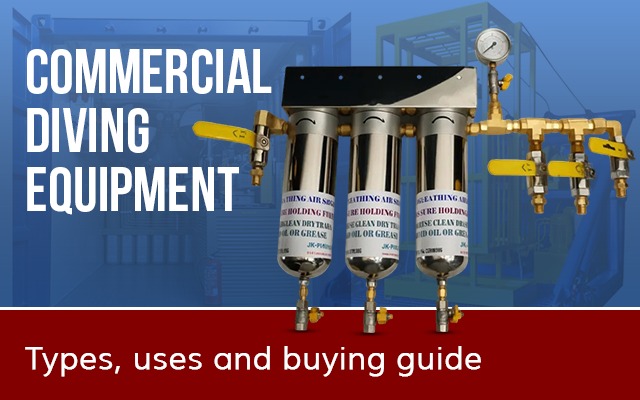
A commercial diving project draws on equipment from several functional groups rather than a single kit:
Which of these a project needs depends on the diving mode (surface-supplied air, mixed gas, or occasionally scuba-based support work), the depth, the diver count, and whether the work is inshore, harbour-based, or offshore.
Safe Working Load (SWL) is the maximum load a lifting appliance or component is certified to lift in a stated configuration. On a diver LARS, the load is far more than the divers. It includes the basket’s own weight, divers in full kit, tools, emergency gas, any guide or clump weight, and the wire and rigging. The A-frame, basket winch and guide wire winch can each carry a different rating, so a single “SWL” in a brochure needs a follow-up question.
A bigger SWL is not automatically safer. Oversized equipment needs more deck space, more power and more mobilisation effort. Size the system to your real load case, with a margin agreed with a qualified engineer.
LARS operating depth depends on wire length, winch drum capacity and the diving mode the system was designed for. The detail buyers most often miss is freeboard. The wire must travel from the sheave down to the waterline and then on to the working depth, so a high-sided vessel uses up part of the wire before the basket reaches the water.
Depth also shapes the type of system. Surface-supplied air work usually uses a basket or stage. Deeper mixed-gas work moves toward wet bell arrangements with different emergency logic.
What to verify: wire length against working depth plus freeboard, hoist wire rope certificates, emergency breathing gas on the basket, and communications and umbilical length at your depth.
Sea state is where datasheets are least consistent. One manufacturer quotes a sea state number, another a Beaufort force, another a significant wave height. These are related but not interchangeable, so two products with similar labels may not be comparable.
What to ask: which wave height, period, wind and current were assumed, whether the limit applies to launch, recovery or both, and which vessel type and mounting position were assumed.
Vessel behaviour matters as much as the sea. A barge and a larger support vessel move differently in the same conditions, and heave at the LARS position loads the basket and wire. Compare the stated limit with seasonal weather data for your site. The go or no-go decision on the day belongs to the diving supervisor under the project’s procedures, not to a datasheet.
A LARS footprint has three parts: stowed, deployed, and the working area around the basket. Check outreach beyond the vessel side, A-frame swing, overhead clearance, basket stowage, the position of the power unit and hose runs, and space for crew and access to dive control.
Deck strength matters just as much. Ask for foundation loads and mounting details, and involve the vessel’s naval architect or class surveyor early, because welding or bolting a lifting appliance to a deck is a structural change. Many offshore LARS units fold to fit a standard 20 ft container. That helps shipping and storage but does not shrink the deployed footprint, so check both.
Choosing commercial diving equipment starts with the project requirement, not the catalogue. Define diving mode, working depth, diver numbers, duration and environment first, then match equipment to those numbers rather than starting from a preferred brand or the lowest quoted price.
Procurement checkpoints worth treating as standard practice:
The right equipment for a project is the equipment that matches the diving mode, depth, duration and documentation requirements of that job. Price alone is not a reliable basis for that decision, since two products at very different price points may be built to different specifications or certification levels that are not obvious from a spec sheet.
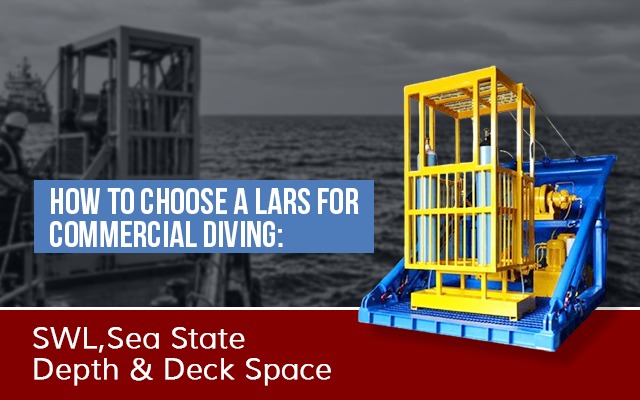
Choose basket capacity from the dive plan. A twin basket, or a larger single basket, may be needed if you carry a standby diver or heavy tools. Check internal dimensions, overhead protection, onboard emergency breathing gas, lighting and communications. Wet bell systems are a separate category with their own umbilical and gas arrangements. J. K. Subsea offers single basket and twin basket launch and recovery systems.
Ask what happens if power fails. Look for a defined backup recovery method, over-travel protection and a written emergency procedure. Then check access for wire inspection and servicing, and ask about spares, maintenance intervals and who in your region can carry out inspections.
Industry guidance and certification are different things. A statement that equipment is “designed to” or “compliant with” a guidance document is the manufacturer’s claim until a competent person or third party verifies it. Confirm which design standard or class rules apply to your vessel and client, and who issues the certificate.
Request design calculations, load test certificates, wire rope certificates, material and weld records, and the operating manual. Make sure the paperwork will satisfy your class surveyor, client and diving system inspector before purchase, not at mobilisation.
Consider two vessels working at the same depth. A low-sided barge has little freeboard, so wire length is rarely a problem, but it may move sharply in short waves. A higher-sided support vessel uses more wire before the basket reaches the surface and offers a different mounting position and deck loading. The datasheet is identical, yet the suitability is not. This is why a depth rating, sea state figure and footprint must always be checked against your specific vessel.
Factor | Ask the supplier | Check against |
SWL | Which component, dynamic factor, test load | Real load case |
Depth | Wire length, drum capacity, freeboard allowance | Working depth plus freeboard |
Sea state | Basis of limit, launch or recovery | Site weather, vessel motion |
Deck space | Stowed and deployed size, foundation loads | Vessel layout, deck strength |
Hydraulics | Flow, pressure, supply, redundancy | Vessel power |
Documents | Certificates, standards, revision | Class, client, inspector |
A good LARS manufacturer answers the questions above directly. Look for in-house engineering, documentation you can review before purchase, the ability to adapt equipment to your vessel, and local support for spares and inspection.
A LARS works as part of a complete spread, so review the diver air panel, air decompression chamber and machinery container alongside it. Our commercial diving equipment guide explains how these parts fit together.
If you are specifying a diver LARS for an offshore or marine project, send your depth, diver count, vessel details and power supply to our team. Use the LARS inquiry form or contact us for product information and a technical discussion.
A LARS (launch and recovery system) lowers divers from the deck into the water and brings them back under the diving supervisor’s control. A typical system has a hydraulic A-frame, a diver basket, winches and a hydraulic power unit.
It is used on diving support vessels, barges and offshore platforms for inspection, maintenance, construction, salvage and port work. Some LARS frames also launch and recover subsea equipment.
A basket carries divers open to the water, usually for surface-supplied diving at shallower depths. A wet bell is a semi-enclosed chamber used for deeper or longer operations. The right choice depends on diving mode and depth.
SWL is the maximum load a LARS component is certified to lift in a stated configuration. The A-frame, winches and basket can each have their own rating, so always ask which part a figure refers to.
The combined load of basket, divers, tools and rigging, the dynamic effects of vessel motion, the certified rating of each component, and the vessel’s deck strength and power.
It depends on the design. Depth is set by wire length, winch drum capacity and diving mode, and the wire must also cover the vessel’s freeboard.
No. The limit depends on the design, vessel, mounting position and how the manufacturer defines it. Ask whether it is a sea state number or a wave height, and whether it applies to launch, recovery or both.
No. The limit depends on the design, vessel, mounting position and how the manufacturer defines it. Ask whether it is a sea state number or a wave height, and whether it applies to launch, recovery or both.
The real load case, depth including freeboard, the basis of the sea state limit, deck space and foundation loads, power compatibility, recovery arrangements, and the certification package.
Many manufacturers can adapt a LARS to the vessel and project. J. K. Subsea states its LARS can be customised for SWL, dimensions, basket capacity and hydraulic power. Confirm any effect on lead time and documentation before ordering.
SWL rating, depth capability, basket capacity, power unit size, materials and custom design. Compare quotes on the same specification basis, including testing and documentation.
Selecting commercial diving equipment comes down to matching documented, certified equipment to a project’s depth, gas, diver capacity and environmental requirements, and confirming a supplier can support that equipment through delivery, commissioning and the life of the project. If you are comparing surface-supplied systems, air panels, decompression chambers, LARS, or a complete diving spread for an upcoming offshore or subsea project, J. K. Subsea’s engineering team can talk through your project’s diving mode, depth, diver numbers, and certification requirements, and help you work out what configuration fits the job. You can review the full diving equipment range or get in touch to discuss your specifications.
Fill in your details below to instantly download the product datasheet.